Get an estimate on delivery to your location.
- Pay by card, bank transfer or USSD at checkout
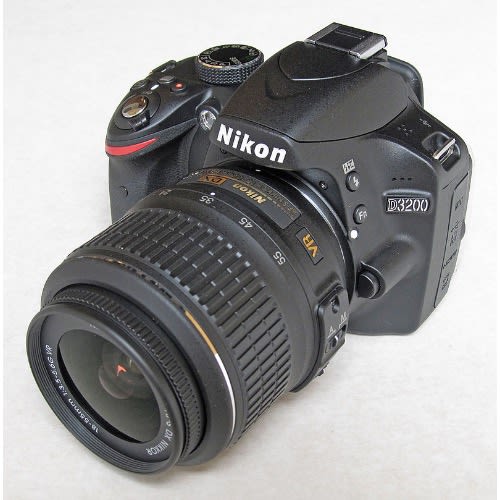
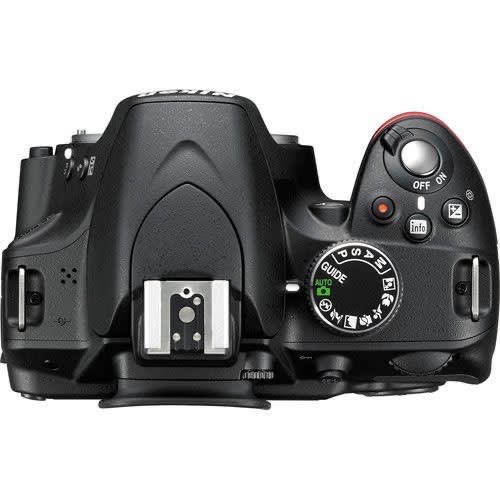
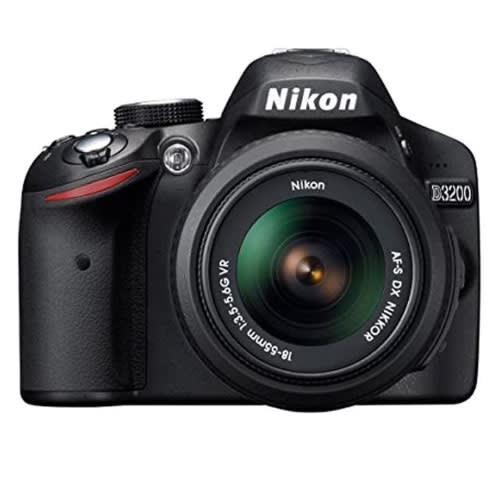
The D3200 represents the latest generation of Nikon's entry-level DSLR offering. The camera's headline feature is inevitably the new 24MP CMOS sensor which makes it equal to Sony's , and in offering the highest pixel count we've yet seen at the APS-C sensor size, and in terms of output resolution, second only to the full-frame professional-grade in Nikon's entire range. More significant than the bare fact of the D3200's pixel count though is that it is available in camera with a starting price of $699 (the same launch price as the D3100 and Panasonic Lumix DMC-C G3, for comparison). The D3200 may not exactly be revolutionary, but it doesn't have to be. It just has to be competitive.
Pixel-count aside, the changes from the predecessor D3100 are subtle but, with 1080p30 video, a 920k dot LCD and the option to add an affordable Wi-Fi transmitter, there are clear benefits over the D3100's specification. As usual for Nikons at this level, the D3200 doesn't feature a built-in focus motor, and nor does it offer auto exposure bracketing. It also features a simplified version of the Active D-Lighting function that is now common across Nikon's DSLR range.
Also missing, oddly, are live view in-camera filter effects. Since Olympus introduced its Art Filters to the E-30 back in 2008, processing filters have become increasingly common on most cameras. And, while they're not an essential feature by any means, they're nice to have, especially in a camera at this level.
- 24MP CMOS sensor
- ISO (plus ISO 12,800-equivalent Hi1 setting)
- Expeed 3 processing
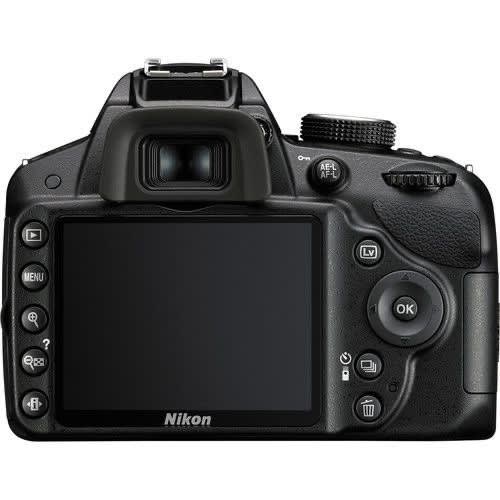
- 3.0", 920k dot screen
- Full HD 1080p30 video (with 25p and 24p options)
- Microphone socket
- Twin IR remote receivers
- 4 frame-per-second continuous shooting
- Guide mode
- with a space for external microphone